
Stöbern
genialokal zum Startbildschirm hinzufügen
Installieren Sie die genialokal App auf Ihrem Startbildschirm für einen schnellen Zugriff und eine komfortable Nutzung.
Installieren Sie die genialokal App auf Ihrem Startbildschirm für einen schnellen Zugriff und eine komfortable Nutzung.
Tippen Sie einfach auf Teilen:
 Und dann auf "Zum Home-Bildschirm [+]".
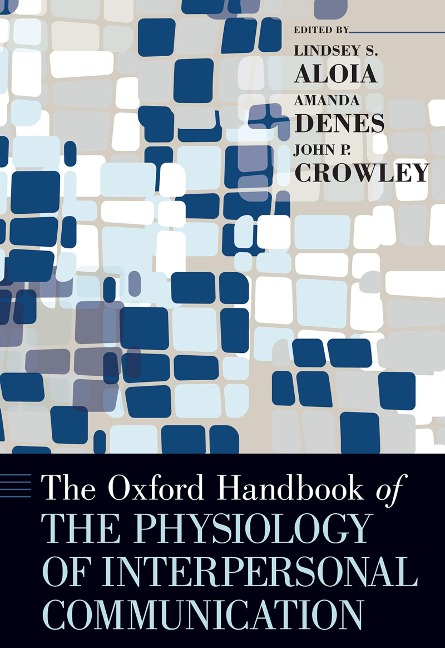
Communication scholars have long recognized the importance of understanding associations between our bodies and communication messages and processes. In the past decade, there has been an increased focus on the role of physiology in interpersonal interactions, resulting in a surge of research exploring topics related to communication in close relationships. This growing line of research explores topics such as affectionate communication, forgiveness, communication apprehension, and social support. Contributing to the increase in physiological research on communication processes is a greater recognition of the bi-directional nature of the associations between communication and the body. Researchers study both the physiological outcomes of communication episodes (e.g., stress responses to conflict conversations), as well as the effects of physiology on communication process (e.g., the influence of hormones on post-sex communication). The Oxford Handbook of the Physiology of Interpersonal Communication offers a comprehensive review of the most prolific areas of research investigating both the physiological outcomes of interpersonal communication and the effects of physiology on interpersonal interactions. This volume brings together thirty-three leading scholars in the field and draws on research from communication studies, physiology, psychology, and neuroscience. Based on quantitative research methods, the Handbook serves as a resource for both researchers and students interested in investigating the mutual influence of physiology and communication in close relationships.
Lindsey S. Aloia is an Assistant Professor in the Department of Communication and the Director of the Center for Communication Research at the University of Arkansas. Amanda Denes is an Associate Professor in the Department of Communication at the University of Connecticut. John P. Crowley is an Assistant Professor in the Department of Communication at the University of Delaware.
Chapter 1: Locating Physiology in the Study of Interpersonal Communication Lindsey S. Aloia, Amanda Denes, John P. Crowley Chapter 2: Conceptualizing and Measuring Affective and Cognitive Empathy: Physiological Bases of Discrete Emotion Communication, Reason, and Involvement in Decision Making Ross Buck, Zhan Xu Chapter 3: The Physiology of Affectionate Communication Kory Floyd, Corey A. Pavlich, Dana R. Dinsmore, Colter D. Ray Chapter 4: The Physiology of Social Pain: Examining, Problematizing, and Contextualizing the Experience of Social Pain Anita L. Vangelisti, Nicholas Brody Chapter 5: Understanding Physiological Associations with Emotional Competence Colin Hesse Chapter 6: Relational Transitions and Stress: Turbulence over the Lifespan of Marriage Kellie St. Cyr Brisini, Denise Haunani Solomon Chapter 7: Selected Physiological Dimensions of Communication Apprehension Michael J. Beatty, Andrea Martinez Gonzalez Chapter 8: The Physiology of Conflict, Verbal Aggression, and Violence Lindsey S. Aloia Chapter 9: Enacting the Demand/Withdrawal Pattern and Physical Well-Being Michael E. Roloff, Rachel M. Reznik Chapter 10: Emotional Support Processes and Physiology: A Dyadic Perspective Jennifer S. Priem Chapter 11: The Physiology of Forgiveness John P. Crowley, Ryan J. Allred Chapter 12: Resilience through Stress: Advancing the Theory of Resilience and Relational Load Tamara D. Afifi, Michelle Acevedo Callejas, Kathryn Harrison Chapter 13: The Hormonal Underpinnings of Sexual Communication Amanda Denes, Anuraj Dhillon, Ambyre Ponivas, Kara L. Winkler Chapter 14: Evoking Issues of Race and Ethnicity in Research on Physiology and Interpersonal Communication Shardé M. Davis Chapter 15: The Psychobiology of Listening: Why Listening is More than Meets the Ear Graham D. Bodie, Andrew D. Wolvin Chapter 16: Real or Not Real? Interpersonal Communication via Digital Platforms and Subsequent Physiological Outcomes Jeanine W. Turner, James D. Robinson, Alexandra McCarthy Chapter 17: Future Directions for Physiological Communication Research Amanda Denes, John P. Crowley, Lindsey S. Aloia
Dieses eBook wird im PDF-Format geliefert und ist mit einem Adobe Kopierschutz (DRM) versehen. Sie können dieses eBook mit allen Geräten lesen, die das PDF-Format und den Adobe Kopierschutz (DRM) unterstützen.
Zum Beispiel mit den folgenden Geräten:
• tolino Reader
Laden Sie das eBook direkt über den Reader-Shop auf dem tolino herunter oder übertragen Sie das eBook auf Ihren tolino mit einer kostenlosen Software wie beispielsweise Adobe Digital Editions.
• Sony Reader & andere eBook Reader
Laden Sie das eBook direkt über den Reader-Shop herunter oder übertragen Sie das eBook mit der kostenlosen Software Sony READER FOR PC/Mac oder Adobe Digital Editions auf ein Standard-Lesegeräte mit epub- und Adobe DRM-Unterstützung.
• Tablets & Smartphones
Möchten Sie dieses eBook auf Ihrem Smartphone oder Tablet lesen, finden Sie hier unsere kostenlose Lese-App für iPhone/iPad und Android Smartphone/Tablets.
• PC & Mac
Lesen Sie das eBook direkt nach dem Herunterladen mit einer kostenlosen Lesesoftware, beispielsweise Adobe Digital Editions, Sony READER FOR PC/Mac oder direkt über Ihre eBook-Bibliothek in Ihrem Konto unter „Meine eBooks“ - „online lesen“.
Schalten Sie das eBook mit Ihrer persönlichen Adobe ID auf bis zu sechs Geräten gleichzeitig frei.
Bitte beachten Sie, dass die Kindle-Geräte das Format nicht unterstützen und dieses eBook somit nicht auf Kindle-Geräten lesbar ist.