Und dann auf "Zum Home-Bildschirm [+]".

Stöbern
genialokal zum Startbildschirm hinzufügen
Installieren Sie die genialokal App auf Ihrem Startbildschirm für einen schnellen Zugriff und eine komfortable Nutzung.
Installieren Sie die genialokal App auf Ihrem Startbildschirm für einen schnellen Zugriff und eine komfortable Nutzung.
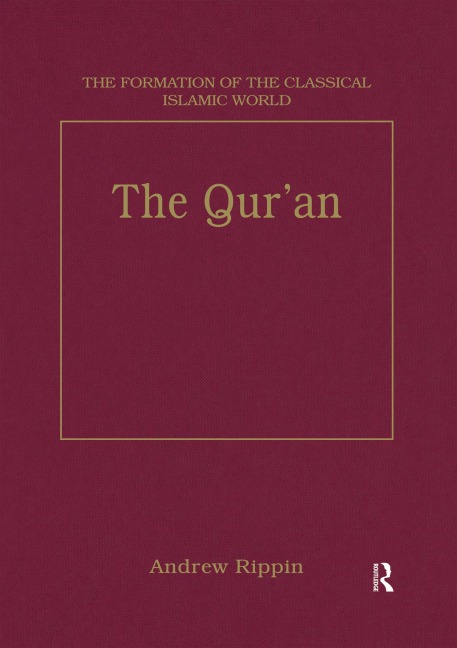
This volume is one of two edited by Andrew Rippin which are designed to complement one another, and to comprehend the principal trends in modern scholarship on the Qur'an. Both volumes are provided with a new introduction by the editor, analysing this scholarship, and providing references for further study. The Qur'an: Style and Contents reveals the variety of approaches followed within the study of the text. From Nöldeke's examination of style through Arkoun's project for the future, these scholarly statements reflect the historical development of the discipline, while providing overviews of key elements for the understanding of the Qur'an.
Contents: General editor's preface; Introduction; Islam and the Qumran Sect, Chaim Rabin; Jesus and Mary in the Qur'an: some neglected affinities, Neal Robinson; The theology of separation and the theology of community: a study of the prophetic career of Moses according to the Qur'an, M. Causse; And become ye accursed apes, Ilse Lichtenstaedter; What did Muhammad mean when he called his religion Islam? The original meaning of aslama and its derivatives, D. Z. H. Baneth; Towards a periodization of earliest Islam according to its relations with other religions, Jacques Waarenburg; Qur'anic Siggil and Aramaic sgyl, Fred Leemhuis; Two notes, Michael B. Schub; A prophet and more than a prophet? Some observations on the Qur'anic use of the terms 'prophet' and 'apostle', W. A. Bijlefeld; The earliest meaning of Qur'an, William A. Graham; The Qur'anic view of youth and old age, Thomas J. O'Shaughnessy; The divine name 'al-Rahman' in the Qur'an, Jacques Jomier; Saj' in the Qur'an: prosody and structure, Devin J. Stewart; Some notes on the distinctive linguistic and literary character of the Qur'an, Angelika Neuwirth; The beginnings of Muhammad's religious activity, Richard Bell; Abu Lahab and Sura CXI, Uri Rubin; Simple negative remarks on the vocabulary of the Qur'an, Robert Brunschvig; Introduction: An assessment of and perspectives on the study of the Qur'an, Mohammed Arkoun; Sound, spirit, and gender in Surat al-qdar, Michael Sells; The apocalypse of Islam, Norman O. Brown; Method against truth: Orientalism and Qur'anic studies, S. Parvez Manzoor; Index.
Dieses eBook wird im PDF-Format geliefert und ist mit einem Adobe Kopierschutz (DRM) versehen. Sie können dieses eBook mit allen Geräten lesen, die das PDF-Format und den Adobe Kopierschutz (DRM) unterstützen.
Zum Beispiel mit den folgenden Geräten:
• tolino Reader
Laden Sie das eBook direkt über den Reader-Shop auf dem tolino herunter oder übertragen Sie das eBook auf Ihren tolino mit einer kostenlosen Software wie beispielsweise Adobe Digital Editions.
• Sony Reader & andere eBook Reader
Laden Sie das eBook direkt über den Reader-Shop herunter oder übertragen Sie das eBook mit der kostenlosen Software Sony READER FOR PC/Mac oder Adobe Digital Editions auf ein Standard-Lesegeräte mit epub- und Adobe DRM-Unterstützung.
• Tablets & Smartphones
Möchten Sie dieses eBook auf Ihrem Smartphone oder Tablet lesen, finden Sie hier unsere kostenlose Lese-App für iPhone/iPad und Android Smartphone/Tablets.
• PC & Mac
Lesen Sie das eBook direkt nach dem Herunterladen mit einer kostenlosen Lesesoftware, beispielsweise Adobe Digital Editions, Sony READER FOR PC/Mac oder direkt über Ihre eBook-Bibliothek in Ihrem Konto unter „Meine eBooks“ - „online lesen“.
Schalten Sie das eBook mit Ihrer persönlichen Adobe ID auf bis zu sechs Geräten gleichzeitig frei.
Bitte beachten Sie, dass die Kindle-Geräte das Format nicht unterstützen und dieses eBook somit nicht auf Kindle-Geräten lesbar ist.