
Stöbern
genialokal zum Startbildschirm hinzufügen
Installieren Sie die genialokal App auf Ihrem Startbildschirm für einen schnellen Zugriff und eine komfortable Nutzung.
Installieren Sie die genialokal App auf Ihrem Startbildschirm für einen schnellen Zugriff und eine komfortable Nutzung.
Tippen Sie einfach auf Teilen:
 Und dann auf "Zum Home-Bildschirm [+]".
Ihr gewünschter Artikel ist in 0 Buchhandlungen vorrätig - wählen Sie hier eine Buchhandlung in Ihrer Nähe aus:

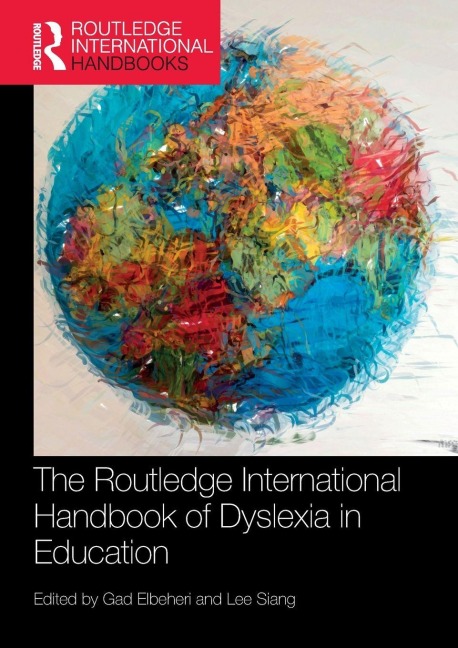
The Routledge International Handbook of Dyslexia in Education showcases the various examples, expertise, and successful initiatives attempted to include students with dyslexia around the globe.
Gad Elbeheri is the Founder and Chairman of Global Educational Consultants, Egypt. Siang Lee is the CEO of the Dyslexia Association of Singapore. He also sits on the Board of DAS subsidiaries, DAS Academy and DAS International. He is a member of the Global Partners Committee representing Singapore and was awarded the International Dyslexia Association's Excellence in Leadership Award in 2020.
Part 1: Dyslexia around the world Chapter 1: Introduction to the Handbook Gad Elbeheri Chapter 2: The changing face of dyslexia: Intervention and support in Australia Mandy Nayton Chapter 3: Overview of dyslexia in Brazil: Discoveries and challenges M. Nico, A. Belli, F. Capovilla, M. De Luca, R. Guimarães, R. De Lima, A.Navas, R. Roama-Alves, A. Seabra, L. Simi and S. De Souza Chapter 4: Dyslexia in Cambodia George Cowie and Ian Hodgson Chapter 5: Dyslexia in Canada: Diversity in cultures, landscapes and approaches to education Corey Zylstra Chapter 6: Shenzhen, China: The innovation and technology for sustainable development in dyslexia services Wang Lei and Liang Yueyi Chapter 7: Czech dyslexia support system: from diagnostic-theraputic to preventive intervention model Anna Kucharská and Klára Špäková Chapter 8: Dyslexia in Egypt Gad Elbeheri Chapter 9: Dyslexia in Estonia: Towards equal educational opportunities for all children Ene Varik-Maasik and Kadi Lukanenok Chapter 10: Light at the end of the tunnel for dyslexics in the multilingual and multiscript Ethiopia Abebayehu Messele Mekonnen Chapter 11: Finnish perspectives on dyslexia Heikki Lyytinen and Mikko Aro Chapter 12: Dyslexia awareness, educational policies and inclusion in a developing world: the Ghanaian experience Rosalin Abigail Kyere-Nartey Chapter 13: Dyslexia in Education in Hong Kong Kevin Kien Hoa Chung Chapter 14: Dyslexia in Maharashtra, India: The past, present and the future - in the light of evolving national legislations Masarrat Khan Chapter 15: Dyslexia in Tamil Nadu State, India: Awareness, technology and multi-sensory teaching in a bilingual environment D. Chandrasekhar, Mala Natarajan and Harini Ramanujam Chapter 16: Bridging awareness and advocacy with collaboration towards better dyslexia management in Indonesia Kristiantini Dewi Soegondo Chapter 17: Dyslexia in Iran: Provisions, practices and beliefs in a relatively transparent orthography Amir Sadeghi, Mitra P. Niyazi, Parisa Tadi, Reyhaneh Mohammadi, Abolfazl Saeidi and John Everatt Chapter 18: Dyslexia in Israel Arabic and Hebrew speakers Salim Abu Rabia and Haneen Wattad Chapter 19: Dyslexia in Italy: Different Interpretations di Piero Crispiani and Eleonora Palmieri Chapter 20: Japan: Developmental dyslexia in two writing systems using three scripts Akira Uno Chapter 21: Demystifying dyslexia in Kenya Phyllis Wamucii Munyi-Kariuki Chapter 22: The Kuwaiti experience of dyslexia: Ample legislation, insufficient awareness and training Abir Al-Sharhan and John Everatt Chapter 23: Latvia: Dyslexia in a post-Soviet environment Eva Birzniece and Thomas Schmit Chapter 24: Dyslexia in Lebanon Ahmad Oweini and Hiam Loufti ElZein Chapter 25: Reality of Dyslexia in Libyan Schools Youssif Zaghwani Omar Chapter 26: Understanding dyslexia in Malawi: Educating and strengthening through awareness Jeranjie Kamfose Chapter 27: Dyslexia in Sarawak, Malaysia: A case for structured phonics Ong Puay Hoon and Ong Puay Liu Chapter 28: Dyslexia in Aotearoa New Zealand: An issue both old and new John Everatt, Alison Arrow, Amanda Denston and Mike Sleeman Chapter 29: Dyslexia in Nigeria: Problems, prospects and possibilities Ijeoma John-Adubasim Chapter 30: Dyslexia from a Pakistani perspective: Unique challenges and innovative approaches Anushka Daroga Kharadi Chapter 31: Qatar: Expanding services for quality education for students with dyslexia Maha Al-Hendawi, Alaa Al-Qahwaji and Clayton E. Keller Chapter 32: Dyslexia in Singapore Geetha Shantha Ram Chapter 33: South Korea: Exploring dyslexia for educational supports beyond screening and diagnosis Aejin Lee Chapter 34: Dyslexia in Spain: Evidence-based Lessons learned from the Canary Islands Juan E. Jiménez Chapter 35: A picture of dyslexia in Sweden Susanna Cederquist and Siv Fischbein Chapter 36: Implementing social change in Taiwan: seeing learning disabilities as differences, not as barriers Su-Jan Lin Chapter 37: Overview of the situation for dyslexia in Thailand Piyanat Maneeratanayon, Nichara Ruangdaraganon, Prapatsorn Pree-iam and Benjawan Sruansan Chapter 38: Dyslexia in education in Turkey Tuncer Yavuz, Irem Su Yavuz, Bora Deveci and Tülin Fidan Chapter 39: Embracing dyslexia within diversity and multilingualism in the United Arab Emirates Ruba Tabari Chapter 40: Embracing dyslexia in the UK: Awareness, action and achievement Gavin Reid and Neil Mackay Chapter 41: United States: The journey towards excellence and innovation for dyslexia Elsa Cardenas Hagan Chapter 42: Dyslexia and education in Vietnam: Towards individual support and inclusion The-Hop Bui and Thi-Cam-Huong Nguyen Part 2: Dyslexia: A Global Perspective Chapter 43: Dyslexia World-wide: A view of emerging themes Angela J. Fawcett Chapter 44: Dyslexia around the globe: Perspectives on practice Gavin Reid Chapter 45: Dyslexia in Asia Catherine McBride, Tomohiro Inoue, Zebedee Rui En Cheah and Gairanlu Pamei Chapter 46: Dyslexia in the Arab World: Perspectives, implications and recommendtions Ahmad Oweini and Ghada Awada Chapter 47: Dyslexia World-wide: A personal view of advances and challenges John Everatt