
Stöbern
genialokal zum Startbildschirm hinzufügen
Installieren Sie die genialokal App auf Ihrem Startbildschirm für einen schnellen Zugriff und eine komfortable Nutzung.
Installieren Sie die genialokal App auf Ihrem Startbildschirm für einen schnellen Zugriff und eine komfortable Nutzung.
Tippen Sie einfach auf Teilen:
 Und dann auf "Zum Home-Bildschirm [+]".
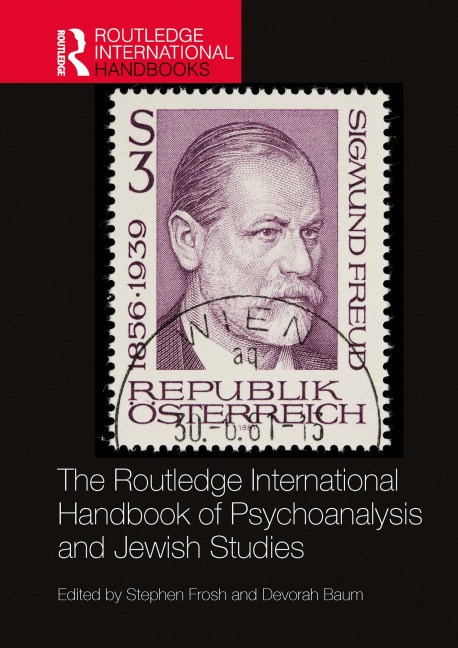
The Routledge International Handbook of Psychoanalysis and Jewish Studies is an innovative, multidisciplinary volume covering the history, religion, culture and politics of Jewish Studies and psychoanalysis. An international team of contributors brings together these two fields and offers a critical assessment of the encounters that emerge from the confrontation and collaboration they have with each other. Chapters cover a broad range of topics, including psychoanalytic history, critical theory, film, ritual, Jewish heritage, the Bible, antisemitism, racism, life- writing and the occult. This Handbook will be of interest to practitioners and researchers in several interrelated disciplines, such as Jewish Studies, psychoanalysis, group analysis, sociology, anthropology, psychosocial studies, literature, film and gender studies. It will be of especial value to students of psychoanalytic and psychosocial studies.
Stephen Frosh is Emeritus Professor of Psychology at Birkbeck, University of London. He was a consultant clinical psychologist and vice dean at the Tavistock Clinic, London, in the 1990s. He is an academic associate of the British Psychoanalytical Society. Devorah Baum is Professor in English Literature at the University of Southampton and at the Parkes Institute at Southampton, one of the world's leading centres for the study of Jewish/ non- Jewish relations.
1.Introduction. Part 1: Histories. 2.Jewish origins of psychoanalysis. 3.The Unconscious before Freud: Between Mysticism and the Spectre of Antisemitism. 4.Falling Out of the World: Portraits of Freud's Home as a Vanishing Act. 5.C.G. Jung, antisemitism and the history of psychoanalysis. 6.Sigmund Freud: Figure of History, Memory, or Anti-Jewish Fantasy? 7.Dreams and Trauma: With Freud to Zion. 8.Nazism and Psychoanalysis in Brazil: The institution of silence in the first psychoanalytic societies. Part 2: Judaism and Bible 9.Beginnings. 10.Freud as Talmudist. 11.The Earliest Trauma Story: Dissociation and Enactment in the Biblical Narratives of Isaac and Rebecca. 12.The Akedah: Abuse of Power and Psychological Processes. 13.Jonah: The Dynamics of Compassion. 14.Rabbinics and Psychoanalytic Insight. 15.Psychoanalysis and Kabbalah. 16.Like Clay in the Hand of the Potter: The place of music in Hasidic prayer. 17.One Servant, Two Masters? Religiously Observant Jews in Psychoanalytic Treatment. 18.Nichsapha: Wandering, Yearning and Mercy in Bracha L. Ettinger's Hebraic Imaginary and her Matrixial Transformation of Psychoanalytical Ethics. Part 3: Antisemitism and Holocaust 19.Psychoanalysis and the Holocaust - A Personal Note. 20.Freud, Psychoanalysis and Antisemitism. 21.Judaism, Antisemitism and Zionism in Fromm and the Frankfurt School. 22.Antisemitism and Magical Thinking. 23.Jewish self-hatred and the 'internalization paradigm'. 24.The murder of the dead father: The Shoah and contemporary antisemitism. 25.Proteophobia and Jewishness: Fear of the Uncategorizable. 26.Frantz Fanon: Psychiatry, Antisemitism and Colonialism. 27.Trauma, Reparations, and the Paradoxes of Post-Holocaust Antisemitism. 28.The Dead Baby. 29.What Happened to the Baby's Head? Between Victims and Victimizers. 30.Thinking Under "Real Fire". 31.Thoughts about the Jewishness of Psychoanalysis: Antisemitism and Its Repercussions Revisited. Part 4: Jewish Culture 32.Trauma, Gender, and the Stories of Jewish Women: The Other Within. 33.Jewish Identity and Musical Modernism: Mahler, Schoenberg, and their complex relationship with Judaism. 34.Sons of the Jewish Joke: Psychoanalysis and Jewish American Literature After 1945. 35.Primitive Agonies and the Breakdown That Always Has Been in Shalom Auslander's Hope: A Tragedy. 36.Jewish Film and Psychoanalysis: Stanley Kubrick - A Case Study. 37.Dreams, intergenerational trauma and the textual unconscious in Daria Martin's Tonight the World. 38. 'A strange, special day. Playing a ghost, yet haunting myself.' The Holocaust, the magical and the real in Elijah Moshinsky's Genghis Cohn. 39.Balzac, Freud, and My Mother (or A Story about Passing).
Dieses eBook wird im PDF-Format geliefert und ist mit einem Adobe Kopierschutz (DRM) versehen. Sie können dieses eBook mit allen Geräten lesen, die das PDF-Format und den Adobe Kopierschutz (DRM) unterstützen.
Zum Beispiel mit den folgenden Geräten:
• tolino Reader
Laden Sie das eBook direkt über den Reader-Shop auf dem tolino herunter oder übertragen Sie das eBook auf Ihren tolino mit einer kostenlosen Software wie beispielsweise Adobe Digital Editions.
• Sony Reader & andere eBook Reader
Laden Sie das eBook direkt über den Reader-Shop herunter oder übertragen Sie das eBook mit der kostenlosen Software Sony READER FOR PC/Mac oder Adobe Digital Editions auf ein Standard-Lesegeräte mit epub- und Adobe DRM-Unterstützung.
• Tablets & Smartphones
Möchten Sie dieses eBook auf Ihrem Smartphone oder Tablet lesen, finden Sie hier unsere kostenlose Lese-App für iPhone/iPad und Android Smartphone/Tablets.
• PC & Mac
Lesen Sie das eBook direkt nach dem Herunterladen mit einer kostenlosen Lesesoftware, beispielsweise Adobe Digital Editions, Sony READER FOR PC/Mac oder direkt über Ihre eBook-Bibliothek in Ihrem Konto unter „Meine eBooks“ - „online lesen“.
Schalten Sie das eBook mit Ihrer persönlichen Adobe ID auf bis zu sechs Geräten gleichzeitig frei.
Bitte beachten Sie, dass die Kindle-Geräte das Format nicht unterstützen und dieses eBook somit nicht auf Kindle-Geräten lesbar ist.