Und dann auf "Zum Home-Bildschirm [+]".

Stöbern
genialokal zum Startbildschirm hinzufügen
Installieren Sie die genialokal App auf Ihrem Startbildschirm für einen schnellen Zugriff und eine komfortable Nutzung.
Installieren Sie die genialokal App auf Ihrem Startbildschirm für einen schnellen Zugriff und eine komfortable Nutzung.
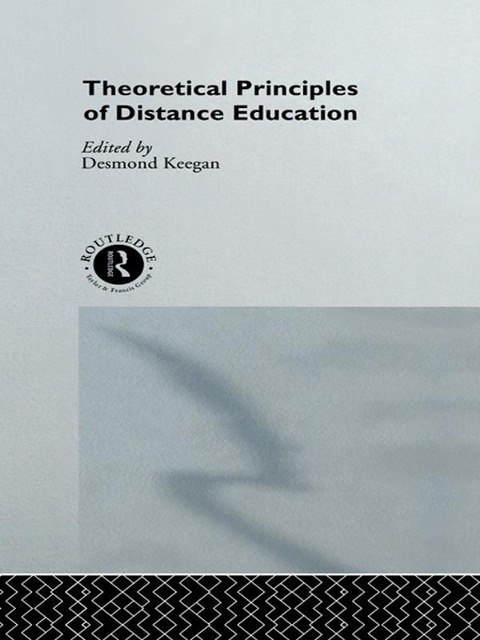
According to UNESCO statistics, 10 million of the world's 600 million students study at a distance. Theoretical Principles of Distance Education seeks to lay solid foundations for the education of these students and for the structures within which they study. As a more industrialised form of education provision, distance education is well adapted to the use of new communication technologies, and brings to education many of the strengths and dangers of post-industrialism. The central focus of the study of distance education is the placing of the student at home or at work and the justification of the abandonment in this form of education of interpersonal, face-to-face communication, previously considered to be a cultural imperative for education in both east and west. This book explores the problems that distance education poses to the theorist, bringing together an international team of distance educators to address these issues for the first time in a systematic way. The team comprises theoreticians, administrators, experts in educational technology and adult education, experts in learning from video machines, from computers and other forms of technology. Contributions from Italy, and Scandinavia contrast with viewpoints provided by scholars from the US, Canada, Australia, and the UK.
Desmond Keegan
Otto Peters, Fern Universitat, Germany; Randy Garrison, University of Calgary, Canada; Peter Jarvis, University of Surrey, UK; Erling Ljosa, Oslo, Norway; Desmond Keegan, Dublin, Ireland, Louise Sauve, Quebec, Canada; Chere Gibson, Wisconsin, USA; Cheryl Amundsen, McGill University, Montreal, Canada; Ted Nunan, Adelaide, Australia; Gary Boyd, Concordia University, Montreal; Tony Bates, Vancouver, Canada/The Open University, UK; Grevill Rumble, The Open University, UK; Bernadetto Vertecchi, University of Rome, Italy; Michael Moore, Pennsylvania, USA
Dieses eBook wird im PDF-Format geliefert und ist mit einem Adobe Kopierschutz (DRM) versehen. Sie können dieses eBook mit allen Geräten lesen, die das PDF-Format und den Adobe Kopierschutz (DRM) unterstützen.
Zum Beispiel mit den folgenden Geräten:
• tolino Reader
Laden Sie das eBook direkt über den Reader-Shop auf dem tolino herunter oder übertragen Sie das eBook auf Ihren tolino mit einer kostenlosen Software wie beispielsweise Adobe Digital Editions.
• Sony Reader & andere eBook Reader
Laden Sie das eBook direkt über den Reader-Shop herunter oder übertragen Sie das eBook mit der kostenlosen Software Sony READER FOR PC/Mac oder Adobe Digital Editions auf ein Standard-Lesegeräte mit epub- und Adobe DRM-Unterstützung.
• Tablets & Smartphones
Möchten Sie dieses eBook auf Ihrem Smartphone oder Tablet lesen, finden Sie hier unsere kostenlose Lese-App für iPhone/iPad und Android Smartphone/Tablets.
• PC & Mac
Lesen Sie das eBook direkt nach dem Herunterladen mit einer kostenlosen Lesesoftware, beispielsweise Adobe Digital Editions, Sony READER FOR PC/Mac oder direkt über Ihre eBook-Bibliothek in Ihrem Konto unter „Meine eBooks“ - „online lesen“.
Schalten Sie das eBook mit Ihrer persönlichen Adobe ID auf bis zu sechs Geräten gleichzeitig frei.
Bitte beachten Sie, dass die Kindle-Geräte das Format nicht unterstützen und dieses eBook somit nicht auf Kindle-Geräten lesbar ist.