
Stöbern
genialokal zum Startbildschirm hinzufügen
Installieren Sie die genialokal App auf Ihrem Startbildschirm für einen schnellen Zugriff und eine komfortable Nutzung.
Installieren Sie die genialokal App auf Ihrem Startbildschirm für einen schnellen Zugriff und eine komfortable Nutzung.
Tippen Sie einfach auf Teilen:
 Und dann auf "Zum Home-Bildschirm [+]".
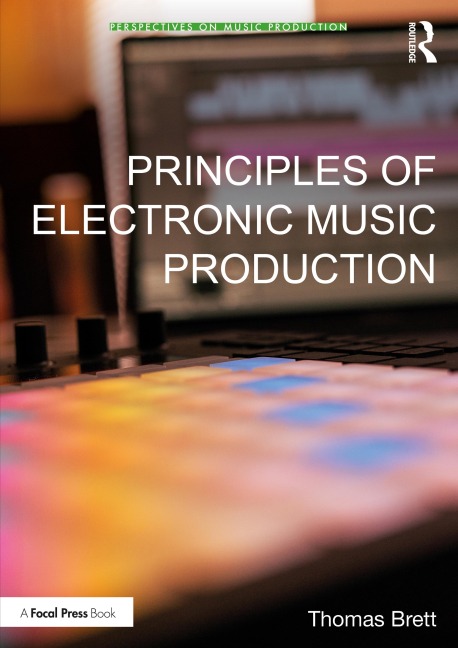
Principles of Electronic Music Production offers a comprehensive overview of the fundamental concepts that shape contemporary electronic music production, revealing it as a complex tradition. Over ten chapters richly illustrated with the practices and ideas of innovative musicians past and present, across a range of styles, this book looks at the producer as an omnimusical figure-a composer-performer-engineer who improvises, designs sounds, programs MIDI, sculpts audio, makes beats, shapes arrangements, and balances mixes. The chapters explore the power of serendipities and musical systems, the phenomenology of listening, using minimalism and constraints, the lessons of AI, playing software as a musical instrument, the alchemy of sound design, creating dynamic musical form, and iterating tracks towards quality to answer a perennial production question: how does one make music that sounds alive at many levels at once? Establishing foundations that music production students, professionals, and hobbyists can build on when thinking creatively in their own work, Principles of Electronic Music Production is a fascinating insight into the art of electronic musicianship.
Thomas Brett is a musician who has played percussion on Broadway since 1997 and holds a Ph.D. in Ethnomusicology from New York University. He is the author of The Creative Electronic Music Producer (Routledge, 2021) and writes about music at brettworks.com.
Introduction; 1. Serendipities; 2. A Living Musical System (Alive at Many Levels at Once); 3. Attention and Attunement; 4. Minimalisms and Constraints; Interlude: AI in Electronic Music Production; 5. Sonics and Instruments; 6. Learning Producing and Building Tacit Knowledge; 7. Ambiences and Atmospheres; 8. Towards Dynamic Structures; 9. Iterating Towards a Quality Without a Name
Dieses eBook wird im PDF-Format geliefert und ist mit einem Adobe Kopierschutz (DRM) versehen. Sie können dieses eBook mit allen Geräten lesen, die das PDF-Format und den Adobe Kopierschutz (DRM) unterstützen.
Zum Beispiel mit den folgenden Geräten:
• tolino Reader
Laden Sie das eBook direkt über den Reader-Shop auf dem tolino herunter oder übertragen Sie das eBook auf Ihren tolino mit einer kostenlosen Software wie beispielsweise Adobe Digital Editions.
• Sony Reader & andere eBook Reader
Laden Sie das eBook direkt über den Reader-Shop herunter oder übertragen Sie das eBook mit der kostenlosen Software Sony READER FOR PC/Mac oder Adobe Digital Editions auf ein Standard-Lesegeräte mit epub- und Adobe DRM-Unterstützung.
• Tablets & Smartphones
Möchten Sie dieses eBook auf Ihrem Smartphone oder Tablet lesen, finden Sie hier unsere kostenlose Lese-App für iPhone/iPad und Android Smartphone/Tablets.
• PC & Mac
Lesen Sie das eBook direkt nach dem Herunterladen mit einer kostenlosen Lesesoftware, beispielsweise Adobe Digital Editions, Sony READER FOR PC/Mac oder direkt über Ihre eBook-Bibliothek in Ihrem Konto unter „Meine eBooks“ - „online lesen“.
Schalten Sie das eBook mit Ihrer persönlichen Adobe ID auf bis zu sechs Geräten gleichzeitig frei.
Bitte beachten Sie, dass die Kindle-Geräte das Format nicht unterstützen und dieses eBook somit nicht auf Kindle-Geräten lesbar ist.