Und dann auf "Zum Home-Bildschirm [+]".

Stöbern
genialokal zum Startbildschirm hinzufügen
Installieren Sie die genialokal App auf Ihrem Startbildschirm für einen schnellen Zugriff und eine komfortable Nutzung.
Installieren Sie die genialokal App auf Ihrem Startbildschirm für einen schnellen Zugriff und eine komfortable Nutzung.
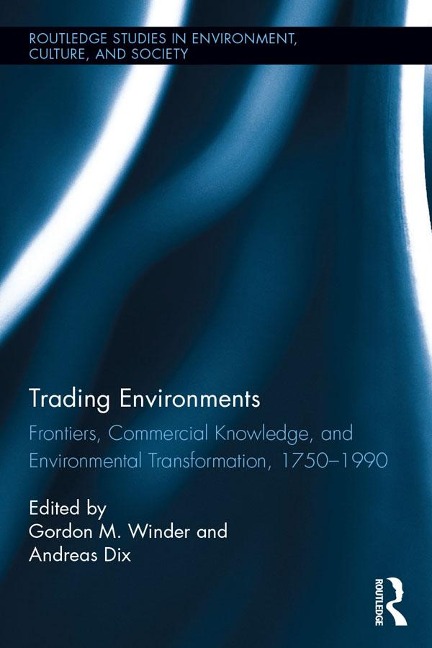
This volume examines dynamic interactions between the calculative and speculative practices of commerce and the fruitfulness, variability, materiality, liveliness and risks of nature. It does so in diverse environments caught up in new trading relationships forged on and through frontiers for agriculture, forestry, mining and fishing. Historical resource frontiers are understood in terms of commercial knowledge systems organized as projects to transform landscapes and environments. The book asks: how were environments traded, and with what environmental and landscape consequences? How have environments been engineered, standardized and transformed within past trading systems? What have been the successes and failures of economic knowledge in dealing with resource production in complex environments? It considers cases from northern Europe, North and South America, Central Africa and New Zealand in the period between 1750 and 1990, and the contributors reflect on the effects of transnational commodity chains, competing economic knowledge systems, environmental ignorance and learning, and resource exploitation. In each case they identify tensions, blind spots, and environmental learning that plagued commercial projects on frontiers.
Gordon M. Winder is Professor of Economic Geography and an Affiliated Professor at the Rachel Carson Center for Environment and Society, LMU-Munich. Andreas Dix is Professor for Historical Geography, Institute of Geography, Otto-Friedrich-Universität Bamberg.
Introduction: Trading Environments 1. Commercial Knowledge and Environmental Transformation on and Through Frontiers Gordon M. Winder and Andreas Dix 2. Consumption History and Changing Environments Andreas Dix Frontier Environments 3. New Frontiers and Natural Resources in Southern South America, c. 1820-1870: Examples from Northwest European Mercantile Enterprise Stephen Bell 4. Opening Up Untouched Woodlands: Forestry Experts Reflecting on and Driving the Timber Frontier in Northern Europe, 1880-1914 Christian Lotz Valuing Environments 5. Problems with Nature in the Trading Environments of the McCormick Reaper, 1850-1902 Gordon M. Winder 6. Valuing Wetlands and Peatlands: Mires in the Natural Resource and Land Use Policies in the Nordic Countries from the Late 18th Century to the Present Day Esa Ruuskanen 7. Lands for Settlement, Forests and Scenic Reserves: Nature and Value in New Zealand, 1890s to 1920s Michael Roche 8. Reimagining the Tropical Beef Frontier and the Nation in Early Twentieth-Century Colombia Shawn Van Ausdal Competing Modernist Logics 9. Industrializing Forests and Naturalizing Industrialization: Forests, Pulp Wood and Environmental Transformations, 1860-1930 Mathias Mutz 10. Trading Degradation for Conservation: Revaluing Rural Landscapes in the American South Craig E. Colten 11. Japan, Iceland and the Destruction of the American Fishing Industry Carmel Finley Environmental Trading 12. Frontier Exchanges: Commercial Calculation and Environmental Transformation Gordon M. Winder and Andreas Dix
Dieses eBook wird im PDF-Format geliefert und ist mit einem Adobe Kopierschutz (DRM) versehen. Sie können dieses eBook mit allen Geräten lesen, die das PDF-Format und den Adobe Kopierschutz (DRM) unterstützen.
Zum Beispiel mit den folgenden Geräten:
• tolino Reader
Laden Sie das eBook direkt über den Reader-Shop auf dem tolino herunter oder übertragen Sie das eBook auf Ihren tolino mit einer kostenlosen Software wie beispielsweise Adobe Digital Editions.
• Sony Reader & andere eBook Reader
Laden Sie das eBook direkt über den Reader-Shop herunter oder übertragen Sie das eBook mit der kostenlosen Software Sony READER FOR PC/Mac oder Adobe Digital Editions auf ein Standard-Lesegeräte mit epub- und Adobe DRM-Unterstützung.
• Tablets & Smartphones
Möchten Sie dieses eBook auf Ihrem Smartphone oder Tablet lesen, finden Sie hier unsere kostenlose Lese-App für iPhone/iPad und Android Smartphone/Tablets.
• PC & Mac
Lesen Sie das eBook direkt nach dem Herunterladen mit einer kostenlosen Lesesoftware, beispielsweise Adobe Digital Editions, Sony READER FOR PC/Mac oder direkt über Ihre eBook-Bibliothek in Ihrem Konto unter „Meine eBooks“ - „online lesen“.
Schalten Sie das eBook mit Ihrer persönlichen Adobe ID auf bis zu sechs Geräten gleichzeitig frei.
Bitte beachten Sie, dass die Kindle-Geräte das Format nicht unterstützen und dieses eBook somit nicht auf Kindle-Geräten lesbar ist.