
Stöbern
genialokal zum Startbildschirm hinzufügen
Installieren Sie die genialokal App auf Ihrem Startbildschirm für einen schnellen Zugriff und eine komfortable Nutzung.
Installieren Sie die genialokal App auf Ihrem Startbildschirm für einen schnellen Zugriff und eine komfortable Nutzung.
Tippen Sie einfach auf Teilen:
 Und dann auf "Zum Home-Bildschirm [+]".
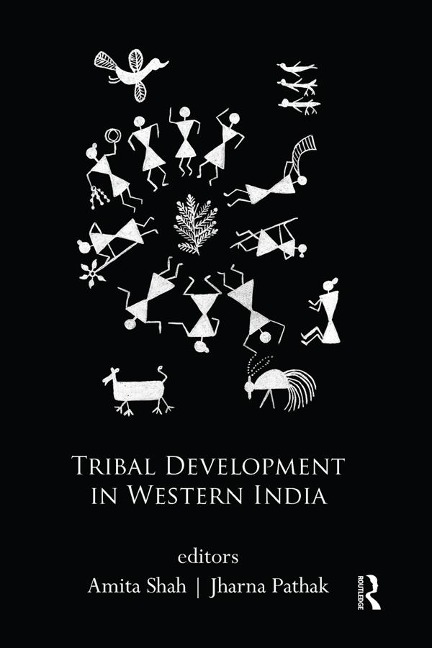
Tribal communities in western India, as elsewhere in the country, have been facing increasing marginalisation and poverty. This is so despite a relatively better record of social movements and work by civil society organisations among them and their political inclusion. Further, the existing literature on tribals focuses more on their socio-cultural situation and less on their economic and human development. Addressing this gap in scholarship, this volume details the processes of tribal development and associated challenges in Gujarat, often viewed as a high-growth economy. Rich in interdisciplinary, empirical analyses, the book comprehensively addresses three important aspects of tribal development - human development, economic opportunities and governance. It critiques recent policy diagnoses and interventions, rather than evaluate policy-outcomes. The volume traces the genesis of continued marginalisation of tribals in the country, and contributes to the ongoing discourse on integrative tribal development. The work will interest scholars and students of development studies, tribal studies, economics, sociology, social work, as also policy-makers, activists, and governmental and non-governmental organisations in the field.
Amita Shah is Director, Gujarat Institute of Development Research, Ahmedabad. Jharna Pathak is Assistant Professor of Economics, Gujarat Institute of Development Research, Ahmedabad.
List of Tables. List of Figures. List of Abbreviations. Preface. Foreword by Ghanshyam Shah. Acknowledgements. 1. Introduction Amita Shah and Jharna Pathak 2. Poverty and Livelihood among Tribals: Status, Opportunities and Strategies Amita Shah and Sajitha O.G. 3. Employment and Income Generation among the Tribal Population: Some Critical Issues Indira Hirway 4. Schooling of Tribal Children: Current Scenario and Challenges Leela Visaria 5. Health Status of the Tribal Population Neha Shah 6. Agroforestry in Tribal Areas: Moving Towards Sustainable Agriculture? Jharna Pathak 7. Dairy Farming as an Option for Strengthening Livelihoods: A Case of Poor and Landless Tribal Households Rudra Narayan Mishra 8. Livelihoods and Financial Behaviour of Tribal Households: Linking Experience and Strategies Tara S. Nair and Bhavani Shankar 9. Fiscal Financing for Tribal Development Archana R. Dholakia and Yogesh T. Yadav 10. Land Acquisition and Displacement among Tribals, 1947-2004 Lancy Lobo 11. Governance Sudarshan Iyengar. About the Editors. Notes on Contributors. Index.
Dieses eBook wird im PDF-Format geliefert und ist mit einem Adobe Kopierschutz (DRM) versehen. Sie können dieses eBook mit allen Geräten lesen, die das PDF-Format und den Adobe Kopierschutz (DRM) unterstützen.
Zum Beispiel mit den folgenden Geräten:
• tolino Reader
Laden Sie das eBook direkt über den Reader-Shop auf dem tolino herunter oder übertragen Sie das eBook auf Ihren tolino mit einer kostenlosen Software wie beispielsweise Adobe Digital Editions.
• Sony Reader & andere eBook Reader
Laden Sie das eBook direkt über den Reader-Shop herunter oder übertragen Sie das eBook mit der kostenlosen Software Sony READER FOR PC/Mac oder Adobe Digital Editions auf ein Standard-Lesegeräte mit epub- und Adobe DRM-Unterstützung.
• Tablets & Smartphones
Möchten Sie dieses eBook auf Ihrem Smartphone oder Tablet lesen, finden Sie hier unsere kostenlose Lese-App für iPhone/iPad und Android Smartphone/Tablets.
• PC & Mac
Lesen Sie das eBook direkt nach dem Herunterladen mit einer kostenlosen Lesesoftware, beispielsweise Adobe Digital Editions, Sony READER FOR PC/Mac oder direkt über Ihre eBook-Bibliothek in Ihrem Konto unter „Meine eBooks“ - „online lesen“.
Schalten Sie das eBook mit Ihrer persönlichen Adobe ID auf bis zu sechs Geräten gleichzeitig frei.
Bitte beachten Sie, dass die Kindle-Geräte das Format nicht unterstützen und dieses eBook somit nicht auf Kindle-Geräten lesbar ist.