
Stöbern
genialokal zum Startbildschirm hinzufügen
Installieren Sie die genialokal App auf Ihrem Startbildschirm für einen schnellen Zugriff und eine komfortable Nutzung.
Installieren Sie die genialokal App auf Ihrem Startbildschirm für einen schnellen Zugriff und eine komfortable Nutzung.
Tippen Sie einfach auf Teilen:
 Und dann auf "Zum Home-Bildschirm [+]".
Ihr gewünschter Artikel ist in 0 Buchhandlungen vorrätig - wählen Sie hier eine Buchhandlung in Ihrer Nähe aus:

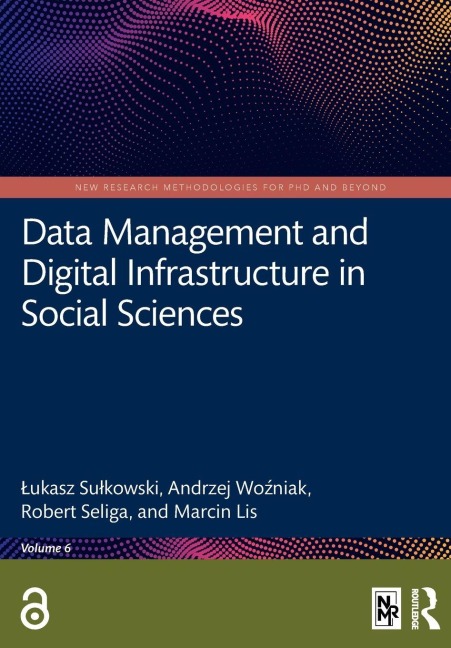
Data Management and Digital Infrastructure in Social Sciences shows how to move from raw digital data to usable evidence, with practical guidance on data literacy, documentation, platforms, and workflows that support transparency and reproducibility. Written for postgraduate students and early-career researchers in the social sciences and management, the volume also supports instructors and research support staff who need a grounded, course-ready guide to modern data practices, including links to evidence-based management and real-world research settings.
-ukasz Su-kowski is a professor of economic sciences and humanities specializing in higher education management, social science methodology, HRM, and organizational culture, and serves as President of WSB University. Andrzej Wöniak serves as Associate Dean for Development and lecturer at WSB University, specializing in organisational decision-making, management information systems, and business process improvement. Robert Seliga holds a PhD in economics, specializing in management, higher education marketing, and the professionalization of management in universities. Marcin Lis is Vice-Rector for Student Affairs and External Relations at WSB University and holds a PhD in engineering, his research interests include quality systems, innovation project management, and integrated management systems, with a particular focus on science - business collaboration and knowledge transfer.
Introduction, 1. The Data-Driven Transformation of Research, 2. Data Literacy and Researcher Competencies, 3. Data Governance, FAIR Principles, and Ethics, 4. Navigating Diverse Data Sources (Surveys, Sensors, Social Media, and Beyond), 5. Data Formats, Structures, and Metadata Standards, 6. Data Platforms and Digital Infrastructure (APIs, Repositories, and Data Lakes), 7. Building and Managing Data Pipelines, 8. Data Lifecycle Management - Provenance, Versioning, and Quality Assurance, 9. Data Sharing, Reuse, and Open Science, 10. Conclusion, 11. References.