
Stöbern
genialokal zum Startbildschirm hinzufügen
Installieren Sie die genialokal App auf Ihrem Startbildschirm für einen schnellen Zugriff und eine komfortable Nutzung.
Installieren Sie die genialokal App auf Ihrem Startbildschirm für einen schnellen Zugriff und eine komfortable Nutzung.
Tippen Sie einfach auf Teilen:
 Und dann auf "Zum Home-Bildschirm [+]".
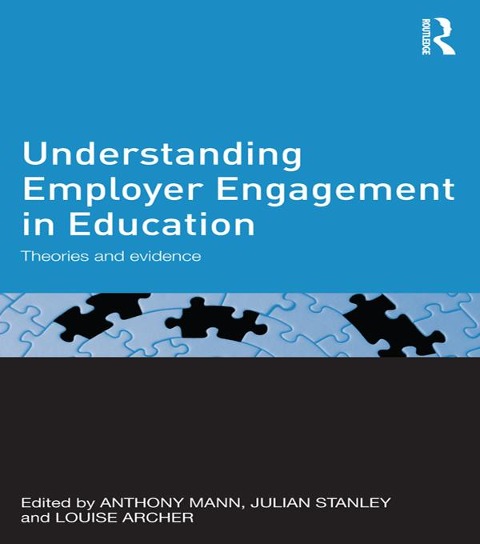
This collection focuses on employer engagement in education, how it is delivered and the differentiated impact it has on young people in their progression through schooling and higher education into the labour market. The focus is not narrowly on vocational or technical education or work-related learning, but on how employer engagement (eg, work experience, internships, careers education, workplace visits, mentoring, enterprise education etc) influences the experiences and outcomes of the broad range of young people across mainstream academic learning programmes. The essays explore the different ways in which education can support or constrain social mobility and, in particular, how employer engagement in education can have significant impact upon social mobility - both positive and negative. Leading international contributors examine issues surrounding employer engagement and social mobility: conceptualisations of employer engagement; trends in social mobility; employer engagement and social class; access and management of work experience; social capital and aspiration; access to employment. The book makes employer engagement an innovative focus in relation to the well established fields of social mobility and school to work transition. By examining what difference employer engagement makes, the essays raise questions about conventional models and show how research drawing on different fields and disciplines can be brought together to provide a more coherent and convincing account. Building on new theorisations and combining existing and new data, the collection offers a systematic exploration of the influence of socio-economic status on school-to-work transitions, and addresses how educational policy can shape more efficient labour market outcomes. In doing so, it draws on, and speaks to, existing literature which has considered such questions from the perspectives of gender, ethnicity and social disadvantage.
Anthony Mann is Director of Policy and Research at the Education and Employers Taskforce. Julian Stanley is Head of Centre, Centre for Education and Industry, University of Warwick, UK. Louise Archer is Professor of Sociology of Education at King's College London, UK.
Preface- Nancy Hoffman, Robert Schwartz Introduction- Julian Stanley, Anthony Mann, Louise Archer Part one: Conceptualising employer engagement in education Chapter 1 Conceptualising Aspiration- Louis Archer Chapter 2 A theoretical framework for employer engagement- Julian Stanley, Anthony Mann Chapter 3 A conceptual framework for the American Labour Market: engagement, achievement and transition- James Stone - Chapter 4 Youth Employment in the Twenty-First Century- Kathrin Hoeckel Part two: Social and economic contexts Chapter 5Social Mobility in Britain 1991-2005- Yaojun Li, Fiona Devine Chapter 6 The winners and losers in the 'hourglass' labour market- Craig Holmes, Ken Mayhew Chapter 7 Local labour markets: What effects do they have on the aspirations of young people?- Ralf St. Clair, Keith Kintrea, Muir Houston. Chapter 8 Local labour markets: What effects do they have on the aspirations of young people?- Emma Norris, Becky Francis Part three: Equity and Access in the experience of employer engagement Chapter 9 The views of young Britons (aged 19-24) on their teenage experiences of school-mediated employer engagement - Anthony Mann, Elnaz T. Kashefpakdel Chapter 10 That aroma of where they are likely to go: Employer engagement in high performing English independent schools- Prue Huddleston, Anthony Mann, James Dawkins Chapter 11 The role of Work Experience in the UK Higher Education admissions process- Steven Jones Chapter 12 How school work experience policies can widen student horizons or reproduce social inequality- Tricia le Gallais, Richard Hatcher Part four: Economic Impacts and Employment Outcomes Chapter 13 School-mediated employer engagement and labour market outcomes for young adults: wage premia, NEET outcomes and career confidence- Christian Percy, Anthony MannChapter 14 Exploring outcomes of youth apprenticeship in Canada- Alison Taylor, Milosh Raykov, Zane Hamm, Chapter 15 Work experience: the economic case for employers- David Massey Conclusion Conclusions- Julian Stanley, Anthony Mann, Louis Archer....................................
Dieses eBook wird im PDF-Format geliefert und ist mit einem Adobe Kopierschutz (DRM) versehen. Sie können dieses eBook mit allen Geräten lesen, die das PDF-Format und den Adobe Kopierschutz (DRM) unterstützen.
Zum Beispiel mit den folgenden Geräten:
• tolino Reader
Laden Sie das eBook direkt über den Reader-Shop auf dem tolino herunter oder übertragen Sie das eBook auf Ihren tolino mit einer kostenlosen Software wie beispielsweise Adobe Digital Editions.
• Sony Reader & andere eBook Reader
Laden Sie das eBook direkt über den Reader-Shop herunter oder übertragen Sie das eBook mit der kostenlosen Software Sony READER FOR PC/Mac oder Adobe Digital Editions auf ein Standard-Lesegeräte mit epub- und Adobe DRM-Unterstützung.
• Tablets & Smartphones
Möchten Sie dieses eBook auf Ihrem Smartphone oder Tablet lesen, finden Sie hier unsere kostenlose Lese-App für iPhone/iPad und Android Smartphone/Tablets.
• PC & Mac
Lesen Sie das eBook direkt nach dem Herunterladen mit einer kostenlosen Lesesoftware, beispielsweise Adobe Digital Editions, Sony READER FOR PC/Mac oder direkt über Ihre eBook-Bibliothek in Ihrem Konto unter „Meine eBooks“ - „online lesen“.
Schalten Sie das eBook mit Ihrer persönlichen Adobe ID auf bis zu sechs Geräten gleichzeitig frei.
Bitte beachten Sie, dass die Kindle-Geräte das Format nicht unterstützen und dieses eBook somit nicht auf Kindle-Geräten lesbar ist.