Und dann auf "Zum Home-Bildschirm [+]".

Stöbern
genialokal zum Startbildschirm hinzufügen
Installieren Sie die genialokal App auf Ihrem Startbildschirm für einen schnellen Zugriff und eine komfortable Nutzung.
Installieren Sie die genialokal App auf Ihrem Startbildschirm für einen schnellen Zugriff und eine komfortable Nutzung.
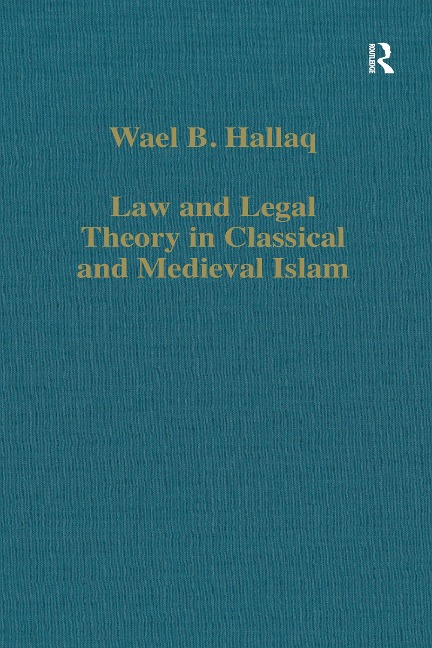
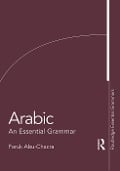
These studies by Wael Hallaq represent an important contribution to our understanding of the neglected field of medieval Islamic law and legal thought. Spanning the period from the 8th to the 16th centuries, they draw upon a wide range of original sources to offer both fresh interpretations of those sources and a careful evaluation of contemporary scholarship. The first articles expound the interrelated issues of legal reasoning, legal logic and the epistemology of the law. There follows a set of primarily historical studies, which question a series of widely held assumptions, while the last items explore issues of legal theory and methodology. One particular topic concerns the role of Shafi'i as the 'master architect' of Islamic legal theory, and Professor Hallaq would finally argue that this image is in fact false and a creation of later centuries.
Wael B. Hallaq is Professor of Islamic Law in the Institute of Islamic Studies, McGill University, Canada
Contents: Preface; The logic of legal reasoning in religious and non-religious cultures: the case of Islamic law and the common law; Non-analogical arguments in Sunni juridical qiyas; Logic, formal arguments and formalization of arguments in Sunni jurisprudence; On inductive corroboration, probability and certainty in Sunni legal thought; Was the Gate of Ijtihad closed?; On the origins of the controversy about the existence of Mujtahids and the Gate of Ijtihad; Was al-Shafi'i the master architect of Islamic jurisprudence?; On the authoritativeness of Sunni consensus; The use and abuse of evidence: the question of provincial and Roman influences on early Islamic law; Notes on the term Qarîna in Islamic legal discourse; The primacy of the Qur'an in Shatibi's legal theory; Usul al-Fiqh: beyond tradition; Index of Arabic terms; General index.
Dieses eBook wird im PDF-Format geliefert und ist mit einem Adobe Kopierschutz (DRM) versehen. Sie können dieses eBook mit allen Geräten lesen, die das PDF-Format und den Adobe Kopierschutz (DRM) unterstützen.
Zum Beispiel mit den folgenden Geräten:
• tolino Reader
Laden Sie das eBook direkt über den Reader-Shop auf dem tolino herunter oder übertragen Sie das eBook auf Ihren tolino mit einer kostenlosen Software wie beispielsweise Adobe Digital Editions.
• Sony Reader & andere eBook Reader
Laden Sie das eBook direkt über den Reader-Shop herunter oder übertragen Sie das eBook mit der kostenlosen Software Sony READER FOR PC/Mac oder Adobe Digital Editions auf ein Standard-Lesegeräte mit epub- und Adobe DRM-Unterstützung.
• Tablets & Smartphones
Möchten Sie dieses eBook auf Ihrem Smartphone oder Tablet lesen, finden Sie hier unsere kostenlose Lese-App für iPhone/iPad und Android Smartphone/Tablets.
• PC & Mac
Lesen Sie das eBook direkt nach dem Herunterladen mit einer kostenlosen Lesesoftware, beispielsweise Adobe Digital Editions, Sony READER FOR PC/Mac oder direkt über Ihre eBook-Bibliothek in Ihrem Konto unter „Meine eBooks“ - „online lesen“.
Schalten Sie das eBook mit Ihrer persönlichen Adobe ID auf bis zu sechs Geräten gleichzeitig frei.
Bitte beachten Sie, dass die Kindle-Geräte das Format nicht unterstützen und dieses eBook somit nicht auf Kindle-Geräten lesbar ist.