Und dann auf "Zum Home-Bildschirm [+]".

Stöbern
genialokal zum Startbildschirm hinzufügen
Installieren Sie die genialokal App auf Ihrem Startbildschirm für einen schnellen Zugriff und eine komfortable Nutzung.
Installieren Sie die genialokal App auf Ihrem Startbildschirm für einen schnellen Zugriff und eine komfortable Nutzung.
Ihr gewünschter Artikel ist in 0 Buchhandlungen vorrätig - wählen Sie hier eine Buchhandlung in Ihrer Nähe aus:

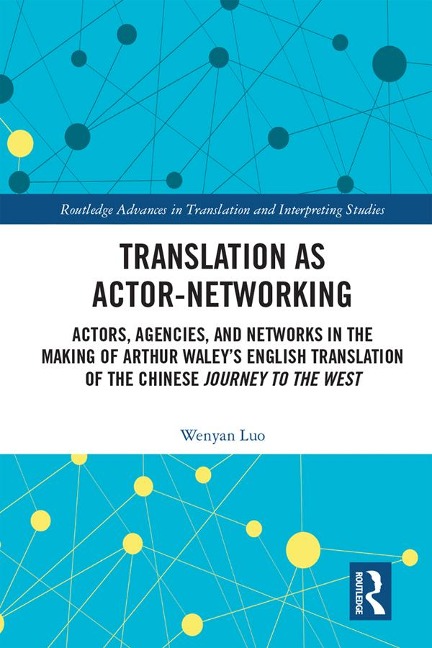
This book employs principles from actor-network theory (ANT) to explore the making of the English translation of a work of Chinese canonical fiction, Journey to the West, demonstrating how ANT, as applied to translation studies, can contribute to a richer understanding of the translation process.
Wenyan Luo received her PhD in 2019 from Durham University, UK. Her research interests lie in text analysis in translation, history of translation between English and Chinese, translation ethics, translator studies, and sociology of translation, in particular Actor-network Theory-approached translation studies.
Introduction Chapter 1 Actor-Network Theory 1.1 Basic clarifications of the name and nature of actor-network theory 1.2 Nonhuman actor 1.3 Long distance control 1.4 The black box 1.5 TranslationANT 1.6 Obligatory passage point 1.7 Immutable mobiles, inscriptions and centres of calculation Chapter 2 Research Context 2.1 Journey to the West: the novel 2.2 The many English translations of Journey to the West 2.3 Monkey translated by Waley: focus of the present study 2.4 Monkey: a unique translation of popularity and fame 2.5 Positioning the research: from literature to the present study 2.6 Approaches to data selection and analysis Chapter 3 The Monkey Project: A Translation in Production 3.1 The Monkey project: a translation under production (1941-1942) 3.2 The Monkey project: from slow to accelerated expansion Chapter 4 All about People: Multiple Human Actors, Multiplied Roles 4.0 Prelude: more actors, but not overwhelmingly more 4.1 Arthur Waley: more than the translator of Monkey 4.2 Duncan Grant: the designer being controlled and resisted