
Stöbern
genialokal zum Startbildschirm hinzufügen
Installieren Sie die genialokal App auf Ihrem Startbildschirm für einen schnellen Zugriff und eine komfortable Nutzung.
Installieren Sie die genialokal App auf Ihrem Startbildschirm für einen schnellen Zugriff und eine komfortable Nutzung.
Tippen Sie einfach auf Teilen:
 Und dann auf "Zum Home-Bildschirm [+]".
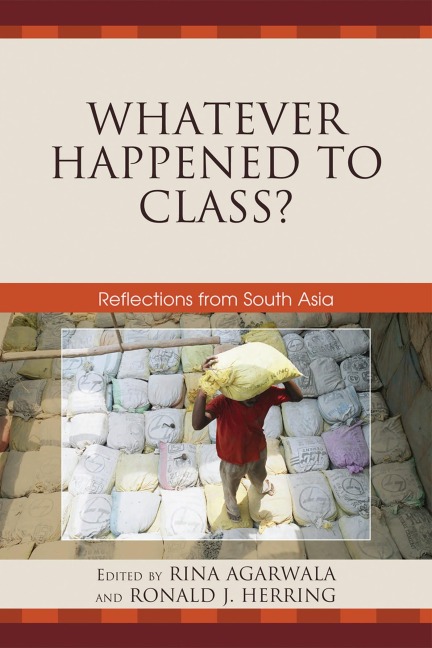
Class explains much in the differentiation of life chances and political dynamics in South Asia; scholarship from the region contributed much to class analysis. Yet class has lost its previous centrality as a way of understanding the world and how it changes. This outcome is puzzling; new configurations of global economic forces and policy have widened gaps between classes and across sectors and regions, altered people's relations to production, and produced new state-citizen relations. Does market triumphalism or increased salience of identity politics render class irrelevant? Has rapid growth in aggregate wealth obviated long-standing questions of inequality and poverty?
Explanations for what happened to class vary, from intellectual fads to global transformations of interests. The authors ask what is lost in the move away from class, and what South Asian experiences tell us about the limits of class analysis. Empirical chapters examine formal and informal-sector labor, social movements against genetic engineering, and politics of the "new middle class." A unifying analytical concern is specifying conditions under which interests of those disadvantaged by class systems are immobilized, diffused, co-opted-or autonomously recognized and acted upon politically: the problematic transition of classes in themselves to classes for themselves.
Rina Agarwala is an assistant professor in the department of sociology at Johns Hopkins University. Ronald J. Herring teaches political economy and political ecology at Cornell University.
Chapter 1 Introduction-Restoring Agency to Class: Puzzles from South Asia
Chapter 2 1. On the Decline of Class Analysis in South Asian Studies
Chapter 3 2. Was the Indian Labor Movement Ever Co-opted? Evaluating Standard Accounts
Chapter 4 3. Workers' Organizations in Pakistan: Why No Role in Formal Politics?
Chapter 5 4. From Work to Welfare: A New Class Movement in India
Chapter 6 5. Middle-Class Activism and the Politics of the Informal Working Class: A Perspective on Class Relations and Civil Society in Indian Cities
Chapter 7 6. Why Did "Operation Cremate Monsanto" Fail? Science and Class in India's Great Terminator-Technology Hoax
Chapter 8 7. Hegemonic Aspirations: New Middle Class Politics and India's Democracy in Comparative Perspective
Dieses eBook wird im PDF-Format geliefert und ist mit einem Adobe Kopierschutz (DRM) versehen. Sie können dieses eBook mit allen Geräten lesen, die das PDF-Format und den Adobe Kopierschutz (DRM) unterstützen.
Zum Beispiel mit den folgenden Geräten:
• tolino Reader
Laden Sie das eBook direkt über den Reader-Shop auf dem tolino herunter oder übertragen Sie das eBook auf Ihren tolino mit einer kostenlosen Software wie beispielsweise Adobe Digital Editions.
• Sony Reader & andere eBook Reader
Laden Sie das eBook direkt über den Reader-Shop herunter oder übertragen Sie das eBook mit der kostenlosen Software Sony READER FOR PC/Mac oder Adobe Digital Editions auf ein Standard-Lesegeräte mit epub- und Adobe DRM-Unterstützung.
• Tablets & Smartphones
Möchten Sie dieses eBook auf Ihrem Smartphone oder Tablet lesen, finden Sie hier unsere kostenlose Lese-App für iPhone/iPad und Android Smartphone/Tablets.
• PC & Mac
Lesen Sie das eBook direkt nach dem Herunterladen mit einer kostenlosen Lesesoftware, beispielsweise Adobe Digital Editions, Sony READER FOR PC/Mac oder direkt über Ihre eBook-Bibliothek in Ihrem Konto unter „Meine eBooks“ - „online lesen“.
Schalten Sie das eBook mit Ihrer persönlichen Adobe ID auf bis zu sechs Geräten gleichzeitig frei.
Bitte beachten Sie, dass die Kindle-Geräte das Format nicht unterstützen und dieses eBook somit nicht auf Kindle-Geräten lesbar ist.