
Stöbern
genialokal zum Startbildschirm hinzufügen
Installieren Sie die genialokal App auf Ihrem Startbildschirm für einen schnellen Zugriff und eine komfortable Nutzung.
Installieren Sie die genialokal App auf Ihrem Startbildschirm für einen schnellen Zugriff und eine komfortable Nutzung.
Tippen Sie einfach auf Teilen:
 Und dann auf "Zum Home-Bildschirm [+]".
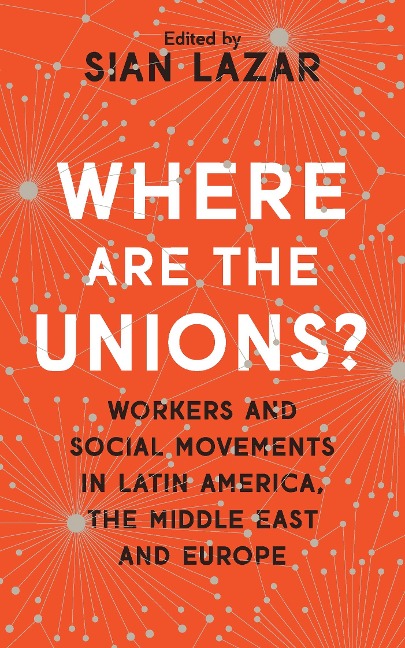
The start of the twenty-first century has been marked by global demands for economic justice. From the pink tide and Arab spring to Occupy and anti-austerity, the last twenty years have witnessed the birth of a new type of mass mobilisation.
Where Are The Unions? compares, for the first time, the challenges faced by movements in Latin America, the Arab world and Europe. Workers' strikes and protests were a critical part of these events, yet their role has been significantly underestimated in many of the subsequent narratives.
This book focuses on the complex interactions between organised workers, the unemployed, self-employed, youth, students and the state, and critically assesses the concept of the 'precariat'. With contributions from across four continents, this is the most comprehensive look at the global context of mass mobilisation in the twenty-first century.
Sian Lazar is a lecturer in the Division of Social Anthropology at the University of Cambridge. She is the author of El Alto, Rebel City: Self and Citizenship in Andean Bolivia (2008) and the editor of The Anthropology of Citizenship: A Reader (2013). She has conducted field research in Bolivia and Argentina, with a focus on collective politics and political subjectivity.
Introduction - Sian Lazar
Part I: Labour movements, society and the state
1. The Egyptian workers' movement: problems of organisation and politics - Anne Alexander and Mostafa Bassiouny
2. From the grassroots to the presidential palace: Evo Morales and the coca growers' union in Bolivia - Thomas Grisaffi
3. The labour union movement and 'alternative' culture in Tunisia: the long view of a close relationship - Mohamed-Salah Omri
Part II: Identity and precarity
4. Migrants' struggles? Rethinking citizenship, anti-racism and labour precarity through migration politics in Italy - Irene Peano
5. The Spanish crisis: from complacency to unrest, from unrest to mobilisation - Salvador Martí i Puig and Marco Aparicio Wilhelmi
6. What are the possible strategies for the emergence of a democratic and revolutionary labour movement in Lebanon? - Walid Daou
7. 'To struggle is also to teach': how can teachers and teaching unions further the global fight for another world? - Mary Compton
Part III: Rank and file challenges to traditional unionism
8. 'Ungrievable' labour and 'unruly' politics: NGOS, workers' rights, and the 2013-2014 protests in Brazil - Lucy McMahon
9. The experience of grassroots syndicalism in Greece: workplace restructuring and the role of traditional trade unions in the tertiary sector - Aris Anagnostopoulos and Angelos Evangelinidis
10. Dilemmas of trade unionism and the movement of the unemployed under neoliberal and progressive regimes in Argentina - Virginia Manzano
11. From invisible to invincible: the story of the 3 Cosas Campaign - Jason Moyer-Lee and Henry Chango Lopez
Afterword: bringing manifestos back in? - Peter Waterman
Dieses eBook wird im PDF-Format geliefert und ist mit einem Adobe Kopierschutz (DRM) versehen. Sie können dieses eBook mit allen Geräten lesen, die das PDF-Format und den Adobe Kopierschutz (DRM) unterstützen.
Zum Beispiel mit den folgenden Geräten:
• tolino Reader
Laden Sie das eBook direkt über den Reader-Shop auf dem tolino herunter oder übertragen Sie das eBook auf Ihren tolino mit einer kostenlosen Software wie beispielsweise Adobe Digital Editions.
• Sony Reader & andere eBook Reader
Laden Sie das eBook direkt über den Reader-Shop herunter oder übertragen Sie das eBook mit der kostenlosen Software Sony READER FOR PC/Mac oder Adobe Digital Editions auf ein Standard-Lesegeräte mit epub- und Adobe DRM-Unterstützung.
• Tablets & Smartphones
Möchten Sie dieses eBook auf Ihrem Smartphone oder Tablet lesen, finden Sie hier unsere kostenlose Lese-App für iPhone/iPad und Android Smartphone/Tablets.
• PC & Mac
Lesen Sie das eBook direkt nach dem Herunterladen mit einer kostenlosen Lesesoftware, beispielsweise Adobe Digital Editions, Sony READER FOR PC/Mac oder direkt über Ihre eBook-Bibliothek in Ihrem Konto unter „Meine eBooks“ - „online lesen“.
Schalten Sie das eBook mit Ihrer persönlichen Adobe ID auf bis zu sechs Geräten gleichzeitig frei.
Bitte beachten Sie, dass die Kindle-Geräte das Format nicht unterstützen und dieses eBook somit nicht auf Kindle-Geräten lesbar ist.