
Stöbern
genialokal zum Startbildschirm hinzufügen
Installieren Sie die genialokal App auf Ihrem Startbildschirm für einen schnellen Zugriff und eine komfortable Nutzung.
Installieren Sie die genialokal App auf Ihrem Startbildschirm für einen schnellen Zugriff und eine komfortable Nutzung.
Tippen Sie einfach auf Teilen:
 Und dann auf "Zum Home-Bildschirm [+]".

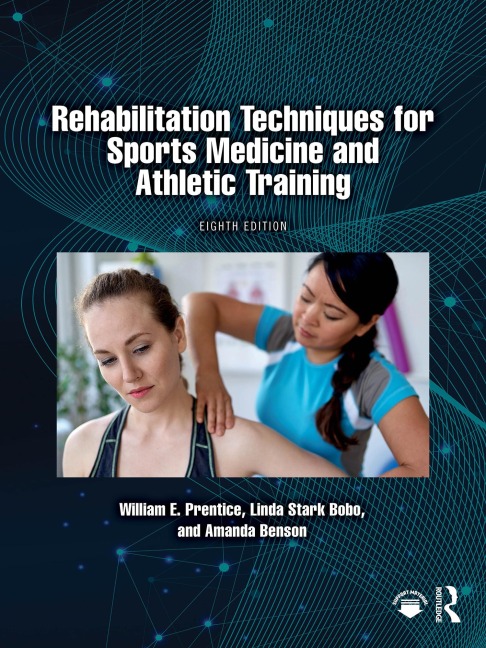
Fully revised and updated, Rehabilitation Techniques for Sports Medicine and Athletic Training, Eighth Edition, is the definitive reference for athletic training students and professionals who are interested in gaining more in-depth exposure to the theory and practical application of rehabilitation techniques used in a sports medicine setting. The chapters draw experts across fields to encompass all aspects of sports medicine rehabilitation. This text provides the athletic trainer with a guide to the design, implementation, and supervision of rehabilitation programs for sport-related injuries that is based on the current best-available evidence in the professional literature including a new chapter examining concussion rehabilitation. The early chapters establish the basis of injury rehabilitation and the later chapters provide exercise models by body parts for a clear, holistic natured approach with step-by-step illustrations. Rehabilitation Techniques for Sports Medicine and Athletic Training is a comprehensive resource for athletic training students, faculty, and clinicians; physical therapists who manage rehabilitation programs for sports-related injuries; as well as for strength and conditioning coaches who supervise performance enhancement programs for return to play.
William E. Prentice, PhD, BSPT, AT Ret, FNATA, is a Professor Emeritus in the Department of Exercise and Sport Science at the University of North Carolina at Chapel Hill, USA. Dr. Prentice is the author of ten textbooks. He has been the recipient of numerous awards from the NATA including the Distinguished Athletic Training Educator Award, the Most Distinguished Athletic Trainer Award, and he has been inducted into the NATA, MAATA, and NCATA Halls of Fame. The William E. Prentice Scholarship and the William Prentice Post-Professional Scholarship are presented annually in his name. Linda Stark Bobo, PhD, LAT, ATC, is a full professor and the founding Program Director for the Graduate Athletic Training Program in the Department of Allied Health Studies at Stephen F. Austin State University (SFA), USA. Dr. Bobo provides medical coverage to USA Tae Kwon Do. She is a recipient of the NATA's Service Award, Most Distinguished Athletic Trainer Award, and SWATA's Excellence (Lifesaving) in Athletic Training Award. Amanda Benson, PhD, LAT, ATC, is the Program Director for the Athletic Training Education Program and Associate Professor of Professional Practice in the School of Kinesiology at the Louisiana State University, USA. She serves on the National Research and Education Foundation Scholarship Committee, is a Review Team member and site visitor for the Commission on Accreditation for Athletic Training Education. Her awards include the NATA Most Distinguished Athletic Trainer Award, the NATA Athletic Training Service Award, and she has been inducted into the SEATA Hall of Fame.
Section I The Basis of Injury Rehabilitation 1. Essential Considerations in Designing a Rehabilitation Program for the Injured Patient; 2. Understanding and Managing the Healing Process Through Rehabilitation; 3. The Evaluation Process in Rehabilitation; 4. Psychosocial Considerations for Rehabilitation of the Injured Athletic Patient; Section II Achieving the Goals of Rehabilitation 5. Establishing Core Stability in Rehabilitation; 6. Reestablishing Neuromuscular Control; 7. Regaining Postural Stability and Balance; 8. Restoring Range of Motion and Improving Flexibility; 9. Regaining Muscular Strength, Endurance, and Power; 10. Maintaining Cardiorespiratory Fitness During Rehabilitation; Section III The Tools of Rehabilitation 11. Plyometric Exercise in Rehabilitation; 12. Open vs Closed Kinetic Chain Exercise in Rehabilitation; 13. Joint Mobilization, Traction and Mulligan Techniques in Rehabilitation; 14. Proprioceptive Neuromuscular Facilitation Techniques in Rehabilitation; 15. Aquatic Therapy in Rehabilitation; 16. Functional Progressions and Functional Testing in Rehabilitation; Section IV Rehabilitation Techniques for Specific Injuries 17. Rehabilitation of Shoulder Injuries; 18. Rehabilitation of Elbow Injuries; 19. Rehabilitation of Wrist, Hand, and Finger Injuries; 20. Rehabilitation of Groin, Hip, Thigh and Pelvis Injuries; 21. Rehabilitation of Knee Injuries; 22. Rehabilitation of Lower Leg Injuries; 23. Rehabilitation of Ankle and Foot Injuries; 24. Rehabilitation of Injuries to the Spine; 25. Rehabilitation of Concussions