Und dann auf "Zum Home-Bildschirm [+]".

Stöbern
genialokal zum Startbildschirm hinzufügen
Installieren Sie die genialokal App auf Ihrem Startbildschirm für einen schnellen Zugriff und eine komfortable Nutzung.
Installieren Sie die genialokal App auf Ihrem Startbildschirm für einen schnellen Zugriff und eine komfortable Nutzung.
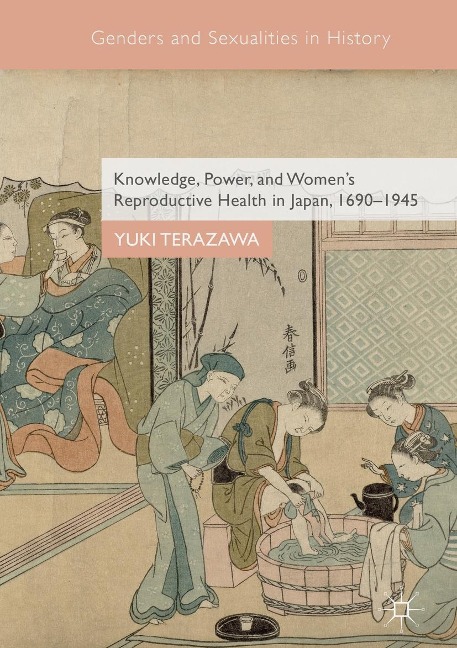
This book analyzes how women's bodies became a subject and object of modern bio-power by examining the history of women's reproductive health in Japan between the seventeenth century and the mid-twentieth century. Yuki Terazawa combines Foucauldian theory and feminist ideas with in-depth historical research. She argues that central to the rise of bio-power and the colonization of people by this power was modern scientific taxonomies that classify people into categories of gender, race, nationality, class, disability, and disease. While discussions of the roles played by the modern state are of critical importance to this project, significant attention is also paid to the increasing influences of male obstetricians and the parts that trained midwives and public health nurses played in the dissemination of modern power after the 1868 Meiji Restoration.
Yuki Terazawa is Associate Professor in History at Hofstra University, USA. She has previously published 'Racializing Bodies through Science in Meiji Japan: The Rise of Race-Based Research in Gynecology' in Morris Low (ed), Building a Modern Japan: Science, Technology, and Medicine in the Meiji Era and Beyond (Palgrave, 2005).
Chapter 1. Introduction.- Chapter 2. The Reproductive Body of the Goseihô School.- Chaper 3. Changing Perceptions of the Female Body: The Rise of the Kagawa School of Obstetrics.- Chapter 4. The State, Midwives, Expectant Mothers, and Childbirth Reforms from the Meiji through the Early Showa Period (1868-1930s).- Chapter 5. Women's Health Reforms in Japan at the Turn of the Twentieth Century.- Chapter 6. Knowledge, Power, and New Maternal Health Policies (1918-1945).- Chapter 7. Epilogue.- Index