
Stöbern
genialokal zum Startbildschirm hinzufügen
Installieren Sie die genialokal App auf Ihrem Startbildschirm für einen schnellen Zugriff und eine komfortable Nutzung.
Installieren Sie die genialokal App auf Ihrem Startbildschirm für einen schnellen Zugriff und eine komfortable Nutzung.
Tippen Sie einfach auf Teilen:
 Und dann auf "Zum Home-Bildschirm [+]".
Ihr gewünschter Artikel ist in 0 Buchhandlungen vorrätig - wählen Sie hier eine Buchhandlung in Ihrer Nähe aus:

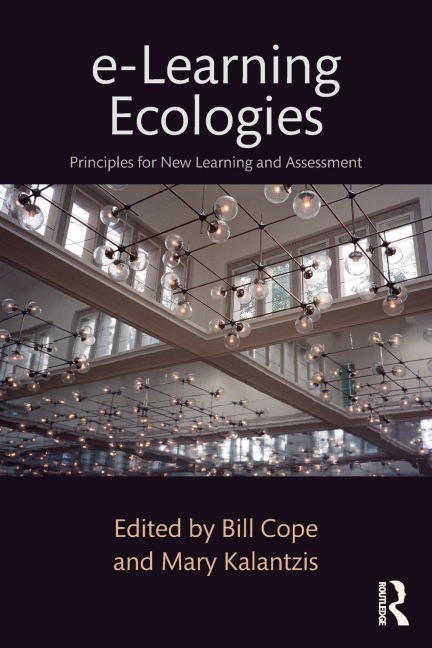
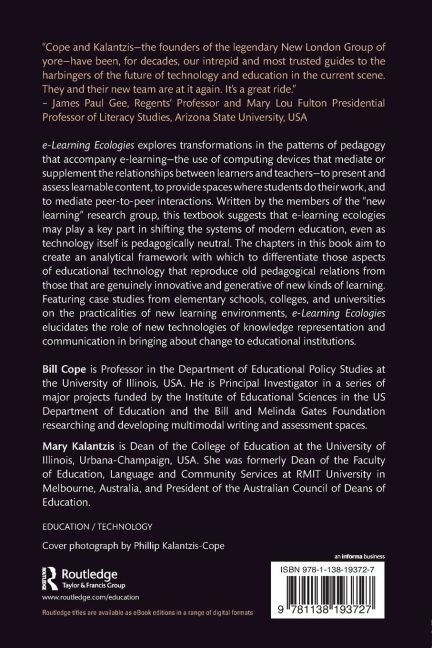
e-Learning Ecologies explores transformations in the patterns of pedagogy that accompany e-learning-the use of computing devices that mediate or supplement the relationships between learners and teachers-to present and assess learnable content, to provide spaces where students do their work, and to mediate peer-to-peer interactions. Written by the members of the "new learning" research group, this textbook suggests that e-learning ecologies may play a key part in shifting the systems of modern education, even as technology itself is pedagogically neutral. The chapters in this book aim to create an analytical framework with which to differentiate those aspects of educational technology that reproduce old pedagogical relations from those that are genuinely innovative and generative of new kinds of learning. Featuring case studies from elementary schools, colleges, and universities on the practicalities of new learning environments, e-Learning Ecologies elucidates the role of new technologies of knowledge representation and communication in bringing about change to educational institutions.
Bill Cope is Professor in the Department of Educational Policy Studies at the University of Illinois, USA. He is Principal Investigator in a series of major projects funded by the Institute of Educational Sciences in the US Department of Education and the Bill and Melinda Gates Foundation researching and developing multimodal writing and assessment spaces. Mary Kalantzis is Dean of the College of Education at the University of Illinois, Urbana-Champaign, USA. She was formerly Dean of the Faculty of Education, Language and Community Services at RMIT University in Melbourne, Australia, and President of the Australian Council of Deans of Education.
Chapter 1: Conceptualizing e-Learning Chapter 2: Ubiquitous Learning - Spatio-Temporal Dimensions of e-Learning Chapter 3: Active Knowledge Making - Epistemic Dimensions of e-Learning Chapter 4: Multimodal Meaning - Discursive Dimensions of e-Learning Chapter 5: Recursive Feedback - Evaluative Dimensions of e-Learning Chapter 6: Collaborative Intelligence - Social Dimensions of e-Learning Chapter 7: Metacognition - Cognitive Dimensions of e-Learning Chapter 8: Differentiated Learning - Diversity Dimensions of e-Learning