Und dann auf "Zum Home-Bildschirm [+]".

Stöbern
genialokal zum Startbildschirm hinzufügen
Installieren Sie die genialokal App auf Ihrem Startbildschirm für einen schnellen Zugriff und eine komfortable Nutzung.
Installieren Sie die genialokal App auf Ihrem Startbildschirm für einen schnellen Zugriff und eine komfortable Nutzung.
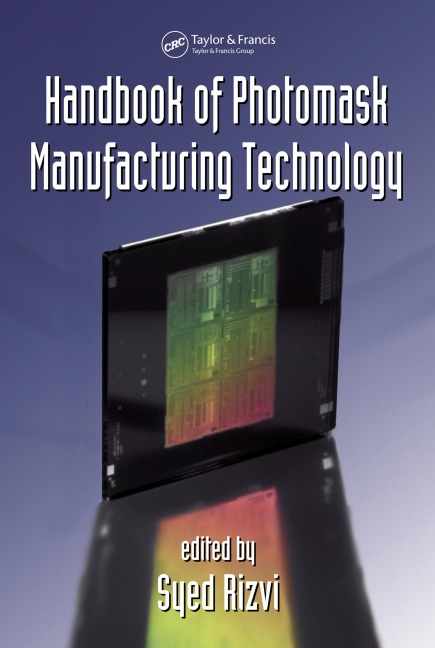
As the semiconductor industry attempts to increase the number of functions that will fit into the smallest space on a chip, it becomes increasingly important for new technologies to keep apace with these demands. Photomask technology is one of the key areas to achieving this goal. Although brief overviews of photomask technology exist in the literature, the Handbook of Photomask Manufacturing Technology is the first in-depth, comprehensive treatment of existing and emerging photomask technologies available.
The Handbook of Photomask Manufacturing Technology features contributions from 40 internationally prominent authors from industry, academia, government, national labs, and consortia. These authors discuss conventional masks and their supporting technologies, as well as next-generation, non-optical technologies such as extreme ultraviolet, electron projection, ion projection, and x-ray lithography. The book begins with an overview of the history of photomask development. It then demonstrates the steps involved in designing, producing, testing, inspecting, and repairing photomasks, following the sequences observed in actual production. The text also includes sections on materials used as well as modeling and simulation.
Continued refinements in the photomask-making process have ushered in the sub-wavelength era in nanolithography. This invaluable handbook synthesizes these refinements and provides the tools and possibilities necessary to reach the next generation of microfabrication technologies.
Syed Rizvi
Introduction. Introduction to Mask Making. Mask Writing. Data Preparation. Mask Writers: An Overview. E-Beam Mask Writers. Laser Mask Writers. Optical Masks. Optical masks: An Overview. Conventional Optical Masks. Advanced Optical Masks. NGL Masks. NGL Masks: An Overview. Masks for Electron Beam Projection Lithography. Masks for Extreme Ultraviolet Lithography. Masks for Ion Projection Lithography. Mask for Proximity X-Ray Lithography. Mask Processing, Materials, and Pellicles. Mask Substrate. Resists for Mask Making. Resist Charging and Heating. Mask Processing. Mask Materials: Optical Properties. Pellicles. Mask Metrology, Inspection, Evaluation, and Repairs. Photomask Feature Metrology. Optical Critical Dimension Metrology. Photomask Critical Dimension Metrology in the Scanning Electron Microscope. Geometrical Characterization of Mask Using SPM. Metrology of Image Placement. Optical Thin Film Metrology for Photomask Applications. Phase Measurement Tool for PSM. Mask Inspection: Theories and Principle. Tool for Inspecting Masks: Lasertec MD 2500. Tool for Mask Image Evaluation. Mask Repairs. Modeling and Simulation. Modeling and Simulation. Index.
Dieses eBook wird im PDF-Format geliefert und ist mit einem Adobe Kopierschutz (DRM) versehen. Sie können dieses eBook mit allen Geräten lesen, die das PDF-Format und den Adobe Kopierschutz (DRM) unterstützen.
Zum Beispiel mit den folgenden Geräten:
• tolino Reader
Laden Sie das eBook direkt über den Reader-Shop auf dem tolino herunter oder übertragen Sie das eBook auf Ihren tolino mit einer kostenlosen Software wie beispielsweise Adobe Digital Editions.
• Sony Reader & andere eBook Reader
Laden Sie das eBook direkt über den Reader-Shop herunter oder übertragen Sie das eBook mit der kostenlosen Software Sony READER FOR PC/Mac oder Adobe Digital Editions auf ein Standard-Lesegeräte mit epub- und Adobe DRM-Unterstützung.
• Tablets & Smartphones
Möchten Sie dieses eBook auf Ihrem Smartphone oder Tablet lesen, finden Sie hier unsere kostenlose Lese-App für iPhone/iPad und Android Smartphone/Tablets.
• PC & Mac
Lesen Sie das eBook direkt nach dem Herunterladen mit einer kostenlosen Lesesoftware, beispielsweise Adobe Digital Editions, Sony READER FOR PC/Mac oder direkt über Ihre eBook-Bibliothek in Ihrem Konto unter „Meine eBooks“ - „online lesen“.
Schalten Sie das eBook mit Ihrer persönlichen Adobe ID auf bis zu sechs Geräten gleichzeitig frei.
Bitte beachten Sie, dass die Kindle-Geräte das Format nicht unterstützen und dieses eBook somit nicht auf Kindle-Geräten lesbar ist.